
News
An Ontario Paramedic Service Taking Part
In Medical Drone Trial
Medical Drone
(Source: Peel Regional Paramedic Services)
(Source: Peel Regional Paramedic Services)
Medical Drone
Source: Peel Regional Paramedic Services
Source: Peel Regional Paramedic Services
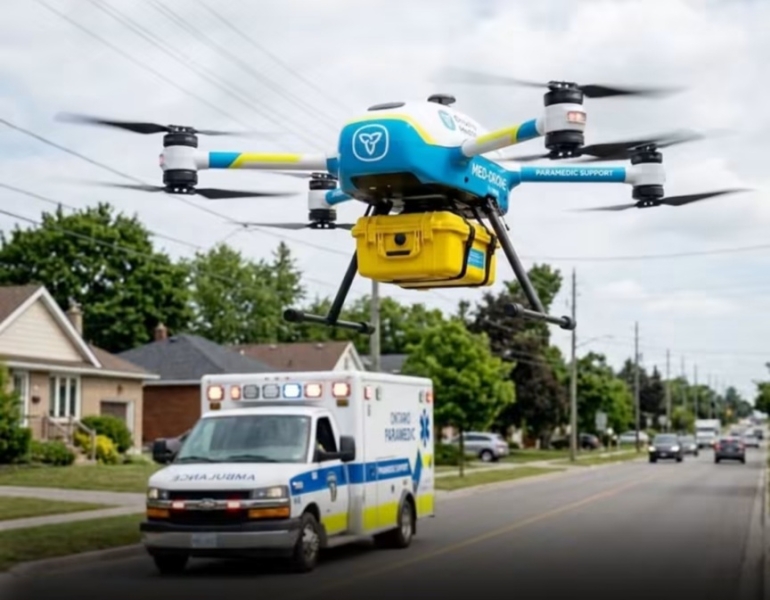
Depending on the type of emergency, a drone can deliver an automated external defibrillator (AED), naloxone to treat an opioid overdose, or an EpiPen for someone experiencing a severe allergic reaction.
Rather than landing at the scene, the drone will hover roughly three metres above the ground and release the medical package in a suitable open area before returning to its base.
The program does not replace paramedic response. Crews will continue to be dispatched to every 911 emergency. In the meantime, emergency dispatchers or paramedics can provide callers with instructions over the phone on how to retrieve and use the equipment safely.
Peel officials say the technology could be particularly useful in rural and more remote communities, where longer distances, traffic and other factors can increase emergency response times.
Throughout the pilot, officials will collect data to assess whether drone-delivered medical equipment can help improve outcomes and whether the program could eventually be expanded to other communities across Ontario.
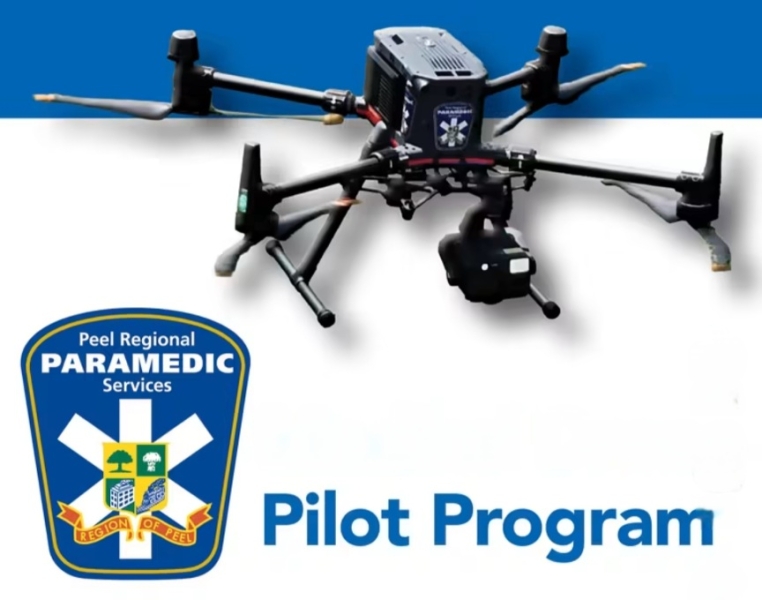
According to Peel paramedics, cameras mounted on the drones are used strictly for navigation, safety and confirming that deliveries have been completed. The recorded footage is not made available to the public.
Liability for this article lies with the author, who also holds the copyright. Editorial content from USPA may be quoted on other websites as long as the quote comprises no more than 5% of the entire text, is marked as such and the source is named (via hyperlink).